Monday, August 20, 2007

Jessie Sheeler: Little Sparta

When we honeymooned in Scotland, J. & I visited Sir Walter Scott's Abbottsford, we walked the Castle battlements, we saw Hugh MacDiarmid's stomping grounds in Biggar. But we didn't make it to Ian Hamilton Finlay's astonishingly rich poet's garden, Little Sparta. Gael Turnbull gave us Alec Finlay's number, counselling us that it would be better to contact Eck than to phone his father directly, but it turned out the younger Finlay was out of the country, and one thing succeeded another in the usual flurry of touristing.

So my "experience" of the garden has been limited to illustrated articles in places like Architectural Digest & various books on contemporary landscape architecture, & to Yves Abrioux's sumptuous and indispensible Ian Hamilton Finlay: A Visual Primer. Jessie Sheeler & Andrew Lawson's Little Sparta: The Garden of Ian Hamilton Finlay, then, is a welcome & enlightening guide to Finlay's major life-work.

Like no other text I've yet seen, Sheeler & Lawson's coffee-table book manages to give one a sense of what it might be like to walk thru the garden, to experience it in situ, rather than as a series of snapshots. The pictures – Lawson, I gather, is a top-notch garden photographer – are uniformly beautiful, everything in eye-popping color and crisp focus. And Sheeler's text is doggedly informative, translating every Latin inscription into English & explaining every classical reference in the patient voice of a young person's Latin teacher (which, it turns out, she is*).

If anything, it's the coffee-table book aspect of Little Sparta that I find a trifle off-putting. On the one hand, among Lawson's beautiful photographs of various aspects of the garden – columns, inscriptions, statues, bridges – are a number of very pretty pictures of foliage & flowers: nice enough, but the sort of thing that could be slotted into pretty much any book about any garden in the British Isles. I'd have appreciated a few more close-ups of IHF's inscribed plaques. And Sheeler's text, while it's thoroughly informed & always informative (if sometimes irritatingly basic for this overeducated reader – I suppose somebody out there needs to have the story of Apollo & Daphne, or of Aeneas & Dido's cave, retold them), tends to render anodyne the more troubling aspects of IHF's ideological art. We're told time & again how Robespierre & Saint-Just were apostles of purity & order; there's all too little mention of how the primary agent of that order was the guillotine. IHF is not interested in aestheticizing the guillotine when he compares it to the classical column or the birch tree: rather, he underlines by shocking juxtaposition the coexistence, the imbrication of terror & the pastoral.

Sheeler's Little Sparta is Sparta as order apotheosized, drained of its concomitant terror. (For a dose of the latter, go watch 300 – which one of my students last semester called his "favorite movie," sending a chill down this 4-eyed wimp's spine.) Dig Sheeler's last sentence:
Those who come prepared to find in Little Sparta works whose essence is poetic, not decorative or horticultural, will find find subsequently that the way they see the world is changed and made more wonderful.
The only word I would quibble with here is the last (& most important): Little Sparta changes the world, and makes it more unsettled, more terrible.

But the heart of this book is its wonderful photographs & interpretive commentary. Anyone interested in landscape architecture, in concrete & conceptual poetry, & in their intersection, should buy this volume posthaste.

*Keen eyes might recognize Sheeler as the Jessie McGuffie who was Finlay's companion in the early 1960s, & who co-founded the Wild Hawthorn Press with him. "Sheeler" is the surname of one of Zukofsky's Brooklyn Polytech students, who visited Finlay & McGuffie in Edinburgh at LZ's suggestion – but therein hangs a painful tale whose outlines can be read in my The Poem of a Life: A Biography of Louis Zukofsky.

Thursday, August 16, 2007

whom you ought to be reading

I sense my blogging has become sclerotic lately, that I'm giving in to my tendency to wait until I have almost the beginnings of an essay on hand before writing anything. (Or I post continual promotional snippets for forthcoming things – nothing wrong with that of course, but not the best reading...) I got no desire to turn Culture Industry into a diary (resounding yawns from potential former readers), but I hanker for something a trifle more off-the-cuff, casual. Like, for instance, Jonathan Mayhew's consistently casual, consistently rivetting Bemsha Swing. You might argue with JM, but it's rare that what's passing across his mind isn't interesting.

Or you could check out the lively discussion – Alicia Ostriker, Charles Bernstein, Norman Finkelstein (the other NF), Eric Selinger – on "What Is a Jew" over at A Big Jewish Blog.

Maybe it's just the end-of-summer blues/blahs.

Tuesday, August 14, 2007

Cold Pastoral: Camouflage

The Pastoral: the realm of the shepherd, his sheep; idealized love & longing, played out in a setting deliberately removed from the city, the polis in which trade & politics are carried out, the realm of urbanism, urbanity. Why begin Some Versions of Pastoral, as Empson does, thusly: "It is hard for an Englishman to talk definitely about proletarian art, because in England it has never been a genre with settled principles, and such as there is of it, that I have seen, is bad"? "I think good proletarian art," the maker of the ambiguities continues, "is usually Covert Pastoral."

Pastoral, in Empson's sense, is any work about the people but not by or for them. A literature, in some sense – by no means necessarily Marxian – of exploitation. For Empson, the Pastoral is always bound up with the political, with the relationships between classes, & therefore the question of proletarian literature ("socialist realism" as Gorki called it) & the whole issue of what was to become of literature under the Soviet experiment, color his entire discussion of the Pastoral in English writing. The Pastoral is written, at least proleptically, under the sign of the hammer & sickle (especially, one supposes, the sickle.)
***
[Dr Johnson, on Lycidas: "Its form is that of a pastoral; easy, vulgar, and therefore disgusting."]
***
Ian Hamilton Finlay's 1978 "Some Versions of Pastoral: Homage to William Empson" (with Gary Hincks) is on its face a series of variations on the cover design of the 1960 New Directions paperback of Some Versions of Pastoral. That latter book's design is a prime example of the flaccid abstractionism into which ND's designers so often fell when at a loss for a proper image: grey blobs on a black ground on the top half, black blobs on a grey ground on the bottom. Finlay seizes those blobs for what they most immediately resemble to a post-war eye: camouflage patterns.

"Some Versions" is of a piece with Finlay's other two-sided, superimposed works, from the 1989 print "Two Landscapes of the Sublime" (a waterfall & a guillotine, of identical shapes & dimensions) to the 1984 "Terror/Virtue" medal, whose face (a classical column) is mirrored on its reverse (a guillotine). These works present hard but not unfamiliar truths about 18th-century thought & history: that the mechanized terror of the guillotine is implied both within the proto-Romantic theories of the Sublime & within the cult of neo-classical, "Roman" virtue. (For more, see my "Piety of Terror.")

The pastoral is still very much alive for Finlay, but it is not the truth of fields, trees, sheep, nymphs & shepherds that compels him; nor is it the classic allegory of pastoral, by which the poet may comment upon current events (cf. Spenser's Shepheardes Calender). Rather, it is the sense in which history has rendered all nature camouflage, a deceptive surface behind which lurk post-modern killing machines, cloaked in the finest products of abstract expressionism.
***
In Manhattan, people dress with a utilitarian flair – clothes for comfort, clothes in which one can walk from place to place even in the baking heat, but still show the form to advantage. (The great fashion faux pas of Summer 2006 – clam-diggers for men – was still in evidence, but more often on tourists than natives.) In Boca Raton, the fashion is for camouflage. (I'm reminded of the first camouflage moment at the turn of the 1970s/80s, largely inspired by Joe Strummer & co.) Standard olive jungle camouflage, of course – though that is usually worn by laborers & small children of the affluent – and the various "desert" and "urban" varieties developed over the past three decades, but more often in the glittering malls & arcades one sees young women in camouflage patterns of eye-popping turquoise & pink. There is no overt commentary being pursued – when one wore camouflage pants in 1981, one was practically overtly calling for the downfall of the Reagan monarchy – as likely as not, these are Bush voters. A semiotic I have yet to decipher.

Thursday, August 09, 2007

Virginia Woolf & life-writing


Today, "working up" VW, happen'd upon these sentences from her fragmentary memoir, "A Sketch of the Past," dabbled at while she was writing a formal biography of her friend Roger Fry:
this throws light not merely on my own case, but upon the problem that I touched on the first page; why it is so difficult to give any account of the person to whom things happen. The person is evidently immensely complicated. Witness the incident of the looking-glass. Though I have done my best to explain why I was ashamed of looking at my own face I have only been able to discover some possible reasons; there may be others; I do not suppose that I have got at the truth; yet this is a simple incident; and it happened to me personally; and I have no motive for lying about it. In spite of all this, people write what they call 'lives' of other people; that is, they collect a number of events, and leave the person to whom it happened unknown. [...]

[My mother] was one of the invisible presences who after all play so important a part in every life. This influence, by which I mean the consciousness of other groups impinging upon ourselves; public opinion; what other people say and think; all those magnets which attract us this way to be like that, or repel us the other and make us different from that; has never been analyzed in any of those Lives which I so much enjoy reading, or very superficially.

Yet it is by such invisible presences that the 'subject of this memoir' is tugged this way and that every day of his life; it is they that keep him in position. Consider what immense forces society brings to play upon each of us, how that society changes from decade to decade; and also from class to class; well, if we cannot analyse these invisible presences, we know very little of the subject of the memoir; and again how futile life-writing becomes. I see myself as a fish in a stream; deflected; held in place; but cannot describe the stream.
How neatly, yet how despairingly, Woolf pinpoints the deepest problems of the memoirist, & shows how that biographer's problems are the same – only multiplied, for the biographer does not have the autobiographer's access to her subject's memory.

Thinking about my own biography seminar this coming spring, determined to do some of my own genre policing: ie, this will be a seminar on biography, deliberately excluding autobiography & memoir. Reasoning?:

•sheer incompetence, for starters: I have never written memoir/autobiography for anyone but my desk drawer, as a personal aide-memoire, & I've never made a close study of the genre.

•picking one's struggles: over the years, I've come to see one of the biographer's central tasks as that of sorting, ranking, weighing, prioritizing evidence (once, of course, evidence has been scrupulously gathered); memory, conventional wisdom has it, trumps all other sorts of evidence. (& this is certainly true of memoir-writing as it's practiced by writers more scrupulous than James Frey.) But in biographical writing, memory – as presented in after-the-fact letters, in interviews, in – yes – memoirs – becomes one among many other sorts of evidences, & in my experience not the most reliable.

If I were to allow memoir's foot into the door, I'd be attracting a bunch of folks who'd be much better served by working with my colleague Bradley, who's worked with & thought about the genre in much greater depth than I; & I'd be opening cans of worms that I don't particularly want to sort thru – as they'd distract from the very particular cans of worms I do want to untangle.

But Woolf's words haunt me with a sense of the ultimate inadequacy of any life-writing. What she's lamenting here, surprisingly enough, isn't the accuracy or inaccuracy of memory, but the incompleteness of memory – and by implication the incompleteness of any view of the past we might construct. (Striking, as well, her shift from the personal – the importance of her mother to her formation – to the social: our inadequacy at sorting out the influences on a life of society, of class, of public opinion, etc. The biographer is perhaps better equipped to address the latter class of influences [ie the social], while memoirist is best at addressing the former [the personal], tho at the same time may perforce may be more blinkered as to the latter.)

[Woolf's own "solution," for those who want to know how the struggle "comes out," lies in casting memory into a fictive artifact (specifically the portrait of her own family life in To the Lighthouse); the biographer's – having to tread the shaking line betweeen invention & "truth" – is rather more complicated.]
***
Latest bit of self-promotion: if you care to see what yr humble blogger looks like among much more distinguished company, check me out on Shoemaker & Hoard's authors page.

Monday, August 06, 2007

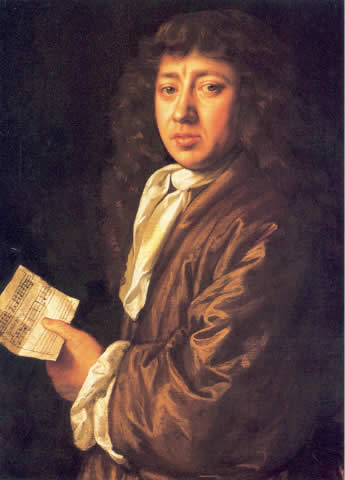
William Bronk: Metaphor of Trees; Claire Tomalin: Samuel Pepys


When I was a pup in grad school & working on the staff of Epoch magazine, my one epistolary encounter with William Bronk taught me a little something about literary politics. I was reading Bronk's collected poems, Life Supports (1981), and his Manifest; and Furthermore (1987), & enjoying them very much. I thought Epoch ought to publish him, & with the permission of CS Giscombe (then the head editor) I wrote Bronk asking for poems. Since he might not know Epoch, I sent along a copy of one of my favorite issues, featuring a clutch of cool poems by John Taggart.

I don't remember the precise wording of his chilly reply, something like I don't think Epoch would be interested in anything of mine. It was several years later that someone gave me the heads-up that Taggart & Bronk, tho they might be living in roughly in the same neighborhood of the alt-poetry cosmopolis, had been little short of actual enemies, since Taggart's 1978 Ironwood essay "Reading William Bronk." In other words, I had chosen precisely the wrong issue of Epoch to send my potential contributor.

There's lots of praise in Taggart's essay on Bronk (reprinted in Songs of Degrees, U Alabama P 1994), but also a good deal of honest reserve (something in too short supply among poets writing about their peers). One conclusion one might draw from Taggart's analysis is that Bronk has built his career on an exploration of a set of epistemological themes – "reality" & the "imagination," the role of the poet in constructing the poet's world, etc. – that have "Wallace Stevens" written all over them, & that as he has delved more deeply into those themes (sometimes in remarkably powerful & moving ways), his focus has become more narrow, his voice more cynical and cranky.

I've read a number of Bronk's books over the past two decades, tho I'm by no means a huge fan (as some of my friends are), & his last collection – Metaphor of Trees and Last Poems (Talisman House, 1999) – hasn't won me over. I admire these poems, admire their clean & spare phrasing, their occasional mordant wit. But the book as a whole is a remarkably monochromatic collection. Open at any point and you find a grim meditation on our place in the world: a world which is not "real," but which we must behave as if it were. For instance (at random):
Information

The forms of gods are not God nor the forms
of men, man. Studying the forms
of the world won't find the world anywhere.
or:
Fleshing Out

None of us is; and those people who thought
they were never were. They made out
to be and some of us were fooled who
wanted to be too and pretended to be
hoping to be believed. Something is.
There is much to admire in this lapidary idiom. Over 140 pages, with few poems reaching beyond 8 or 10 lines, I find it ultimately wearying, like a 500-page collection of haikus. Stevens without the "gaiety" of language; Beckett without the outrageous humor.
***
While there's so much else that needs to be read, I can't keep myself away from Claire Tomalin's Samuel Pepys: The Unequalled Self (Knopf, 2002) – it seems to fly by in fascinating 40- or 50-page chunks. She makes a very good case for the inherent interest of Pepys's life, the importance of his role in reforming & administering the British Navy, his closeness to some of the great intellectual fire-sources of his day (Hooke, Wilkins, Newton). Of course, Pepys would be only a footnote to history, a half-column in the DNB, were it not for his Diary, the 10-year shorthand record of the 1660s, which traces both Pepys's public & professional accomplishments & the most embarassing details of his private life – his rocky but on the whole satisfactory marriage, his career-related hopes & fears, his relentless busy-handed philandering.

I'm about 2/3 thru Tomalin's not overlong account of Pepys's life, but I've become so assured of her biographical skill that I'm confident she'll be able to surmount the greatest challenge before her: the 100 pages of The Unequalled Self that cover the last 33 years of Pepys's life – the years after he ceased keeping the Diary. It's the Diary of course that makes Pepys a great figure in English literature, & it's the diary that makes him the first subject susceptible to a truly modern biography, one that aims to tell both the external & the internal facts of its subject's life.

Yes, I've been thinking about biography as genre again. For a rather mordant perspective, fuelled by two recent books on the practice of biography, check out Louis Menand's "Lives of Others: The Biography Business" in the New Yorker. (Does Menand have a small child? I note a Sesame Street reference in his discussion of John Coltrane.)

Sunday, August 05, 2007

housekeeping

I've spent a little bit of time, not actually blogging, but cleaning up the blogroll & list of links on the right. So everything should work these days – no more listings of blogs that haven't been up for months & months, no more outdated URLs. At least I hope. Let me know if you click on some duds.

I also pumped up the "Scroggins online" links list, even as I scratched my head (still sticky with sunscreen) & wondered if these things are worth the trouble. Of course they are! Random visitors* will bounce in droves from this weblog straight over to Amazon.com to buy The Poem of a Life: A Biography of Louis Zukofsky. (Did I mention that it's available for preorder? & at a huge discount?)

Yeah. right. But who knows? And for my 7 readers who might actually be interested, I think I now have a fairly comprehensive set of links to my poems online.

*I am proud to announce that Culture Industry is at present the #1 Google hit for the search "nipple portraiture." Now how in hell do you beat that?

Saturday, August 04, 2007

self-promotional department

It's nice to find one's own face staring out at one from the internets, particularly in as astonishingly flattering a photograph as Shannon O'Brien's. Shoemaker & Hoard, in short, have put up a page for the forthcoming The Poem of a Life: A Biography of Louis Zukofsky. (Note handy link to the amazon.com page for the book, in case you have $20 burning a hole in your pocket.)

Wednesday, August 01, 2007

Policing the Fourth Genre

Okay, so enough ribbing – yes, I’ve spent (wasted? consumed?) a number of hours that could have been devoted to more serious activities to reading Harry Potter & the Healthy Fellows, & of course I couldn’t put it down, & of course I won’t remember a single detail of the plot a week from now. Which says nothing about the book’s merits or lack thereof – it’s just one of my own hardwired shortcomings, being unable to remember what happens in a work of fiction. I have to reread effing Moby-Dick every time I teach it, after all.

I won’t add anything to Josh Corey’s (congratulations, Josh! – welcome to the great world of the sleep-deprived) kind words about the Potter phenomenon, except to note that these are books that draw you in by the force of what happens, rather than by the strength of their prose. I read a stack of novels in New York – Virginia Woolf’s The Voyage Out & Night and Day, Jean Rhys’s Wide Sargasso Sea, Sterne’s Sentimental Journey, The Great Gatsby, Paul Auster’s Oracle Night. It’s hard to admire any else’s prose after reading Woolf, who’s incapable of writing an intentionally graceless sentence, & Rhys is almost as good. Fitzgerald looks rather thin & tawdry beside them, & Auster little better than sturdy, workmanlike. In all this company, JKR comes across as a engineer rather than an artist, a maker of intricate contraptions that amuse and intrigue, but which in the end don’t really resonate very deeply. Each to his or her own – the HP industry has gotten my money, & my time, & now back to Jacob’s Room.
***
My chums at Incertus, which has swollen into an almost Kos-like group blog, are posting so quickly that it’s difficult to keep up. I was taken by a recent triad of posts (scroll & scroll again) by my colleague & Lucius Malvoy-lookalike William Bradley, venting much spleen at James Frey & his fictionalized “memoir” A Million Little Pieces, a controversy whose 15 minutes I’d thought had passed long since. At the time, I’d thought this was a tempest in a teapost. Of course one expects a memoirist to tell the truth in his work, or at least the truth as he remembers it or – & this is a crucial distinction – wants it remembered. And when somebody deliberately alters details & sexes up his story, as Frey did, then it’s perfectly appropriate to yank off the codpiece & reveal the true dimensions of the organ. (And to have a good laugh, & to ostracize the malefactor, etc.)

There’s always a spectrum of truth-telling in memoir. Ruskin’s Praeterita, which is one of his most beautiful & affecting books, sort of manages to leave out any mention of Ruskin’s first, ill-fated marriage; William Carlos Williams’s Autobiography is chock-full of inaccuracies and downright distortions, most of them due to WCW’s failing memory; & one can rest assured that most political autobiographies, from Richard Nixon’s down to Bill Clinton’s, are full of outright lies. We forgive all of those omissions & distortions (save for the last category), because we’ve entered into a readerly contract that the memoirist will be trying to give us a narrative which dovetails with reality.

Now I’m one of those tiresome people who likes to read the fine print on contracts before signing them, & when I’m told that a writer is going to give me the “truth” – or as William puts it, “Truth” – I’m inclined to quote Pontius Pilate: “What is truth?” Or to recall the sentence from Aristotle’s Poetics on how poetry (read “fiction”) is “graver and of more philosophical import” than history. Which doesn’t mean that William & I don’t agree that James Frey is a knave for trying to pass off an embellished narrative as literal fact. But I read this as a single case – among many other cases – of a writer on the make. It’s not an affront to the genre of the memoir, any more than the Milli Vanilli scandal undermined the “foundations” of dance-pop music or Ted Kooser’s being named poet laureate means the end of American poetry.

In short, I find one of William’s sentences particularly interesting:
Here's a man who got caught lying in a piece of creative nonfiction, but rather than admitting his wrong-doing, he tried to destroy an entire genre of literature by claiming that "everyone else is doing it"; anyone who claims to be writing about his or her own life is just as big a liar as James Frey.
Okay, so this is part of the intro to an “open letter” to Oprah Winfrey, & we ought to allow room for hyperbole. But how do you “destroy an entire genre of literature”? The logic is inescapable, & William argues it eloquently: there’s this genre of literature – call it “memoir,” call it more broadly “creative nonfiction” – & it has a single differentium that sets it apart from the other genres: it tells the truth (Truth).

I read an awful lot of things that aren’t fiction or poetry, & that have definite “literary value.” But I don’t know a hell of a lot about Creative Nonfiction as an academic discipline. I taught an undergraduate course in it 7-8 years ago & used maybe the 2nd edition of that anthology The Fourth Genre (plus a hell of a lot of supplemental stuff, since I found most of the pieces in the anthology pretty thin), but I’m pretty ignorant of the critical discourse that’s grown up around it. I’m not even quite sure what gets included & what doesn’t. The ad copy for the latest edition of The Fourth Genre describes “the full range of contemporary creative nonfiction” as “personal narrative, essay, memoir, literary journalism, and personal cultural criticism.” Is biography CNF? (guess not) Essayist book reviews? (that must be “literary journalism” – maybe?) Event history? (probably not – but what if it’s beautifully written, like Simon Schama’s Dead Certainties?) As with most genres, there seem to be things that are near the center of the genre – in this case, memoir and the personal essay – but the fringes are less well defined. (The Wikipedia entry on Creative Nonfiction, as one might expect, is a model of incoherence. I suspect I ought to trot to the library & read the latest issue of Creative Nonfiction, where this stuff is no doubt being thrashed out as we speak.)

Genres are notoriously difficult to define, in part because writers are always pushing at limits (prose poetry, anyone? the nonfiction novel? some of Beckett’s late drama, without characters, action, or speech?) & in part because the recognized genres haven’t grown up in logical, philosophically coherent ways. They’re not logical categories, but what Wittgenstein called “family resemblance” categories, “network[s] of similarities overlapping and criss-crossing,” of affinities shared among some members and not others. (What does Tender Buttons have in common with the Odyssey, or the Odyssey in common with a Shakespeare sonnet – save that they’re all “poetry”?)

In the case of CNF, what one has is a fairly young generic classification. People have been writing things for centuries that one could retroactively call CNF, but it’s only in the last few decades that it’s been given a name – or, more crucially, that it’s been given a place in the academy: and with that place in the academy comes the obligation to define and defend one’s practice.

William’s emphasis on the truth-value of CNF is a clear instance of genre-defining, & genre-policing. (And as usual, whenever a writer starts defining his own genre, what’s he’s really doing is defining his ideal view of his own writing.) For my part, I’m as little fond of the genre police as I am of the dream police, the canon police, or any other police force. Pronouncing what is & what isn’t a member of X genre smacks of weeding out the Mudbloods & the Muggle-borns, & I’ve always found the most interesting spots of writing are where the genres get blurred & start to overlap. And while I whole-heartedly agree with William’s scorn for standards of accuracy & decency in the contemporary political & cultural climate, I fear that I’ve imbibed way too much post-structuralism (not to mention good old fashioned American Pragmatism) over the years to take a call for “transcendental Truth” without more than a dash of salt & suspicion.

Monday, July 30, 2007

George Benjamin: Into the Little Hill

Last week I was perfectly reconciled to my role as bathgiver & putter-of-children-to-bed while J. worked her way thru a formidable program of theater & performance in Manhattan (after all, it’s her business to keep up with this stuff). But a happy in-lawal intervention made it possible for both of us to take in a Lincoln Center Festival performance of a new “opera,” Into the Little Hill, with music by British composer George Benjamin and libretto by British playwright Martin Crimp.

[First, unfortunately, we had opted to take the girls to one of those al fresco Shakespeare productions that spring up all around New York in the summer months, this one a Romeo & Juliet put on by a group of local amateurs – god bless ‘em – in a neighborhood park. It was a good thing it was an abbreviated production, only an hour, for if it had run the full 3 they might have found my cold and self-dispatched body right there beside those of the rather histrionic Juliet and the admittedly quite dishy Romeo. Thank god for amateur theater – and thank god for fine little Afghan restaurants & Dutch beers (yes, Heineken – shut up, Brian) to ease the aftershock.]

Into the Little Hill is an adaptation of the Pied Piper of Hamelin story, sung by a soprano (the very short Finn Anu Komsi) & a contralto (the very tall Hilary Summers, whose voice seemed oddly familiar; only later did I realize that I knew her from a half-dozen Michael Nyman recordings). The set was rigidly abstract, & the small orchestra – the excellent Ensemble Modern, under the baton-free direction of Franck Ollu – was disposed about the stage itself, so that the 2 singers came forward on brilliantly lighted catwalks between the strings, brass, & woodwinds.

Now, I’ll freely admit that I don’t know much about music – but I know what I like. I’ve probably seen a dozen operas in performance, & I know that I don’t care much for 19th century lyric opera. Alas, I found Tosca and La Boheme unutterably silly. The Magic Flute (with Maurice Sendak sets & costumes) was grand, but The Barber of Seville did nothing for me. My benchmark for opera experience still remains the production of Wozzeck J. & I saw in Florence (dir. Zubin Mehta), which seems a lifetime ago.

So I’m not the ideal opera-goer: but I was absolutely rivetted by Benjamin’s Into the Little Hill. The music bears traces of minimalism (more the British Bryars/Nyman variety than the American Adams/Glass Reich), but is far more jagged & expressionistic. In his own revolt against what he calls the “gray” tonalities of serialism, Benjamin has fastened on the unworldly harmonies of his teacher the French composer Olivier Messiaen – evident as much in Komsi’s singing, which often often approached the condition of birdsong or rat-squeak, as in the rich use of harmonies in the strings.

The timbres of the music, as much as the harmonies, were striking. In some of the louder passages, the blatting brass was joined by banjo, mandolin, and clacked sticks; for 2 very memorable stretches, pizzicatto strings accompanied a mesmerizing bass flute – an instrument I had never (knowingly) heard before, but which I’m now a big fan of.

Perhaps best of all was being in an auditorium with a mixed bag of people – college students, seniors, lots of artsy types in the inevitable black artsy-type uniform (yes, I wear it too) – who were there to hear the music, rather than to get the best deal off of their season tickets to some South Florida version of “high culture.” Imagine that! – a full hour of rather challenging, sometimes quite abrasive music, unrelieved by histrionic arias or breathtaking scenery, nobody shifting uneasily in their seats, nobody grunting with boredom of dissatisfaction, nobody loudly whispering “wake up, Harold!” (In South Florida, it’s difficult at the end of a performance to distinguish between a “standing ovation” & a “leaving ovation” – the latter being when the audience rises to clap so they can get out to their cars in the parking garage more quickly.)

So that’s the music tip for the day: Benjamin’s Into the Little Hill. I think it’s fab, & you ought to go see it – that is, if you live in a major metropolitan area. Me, I’m back in Palm Beach County for the foreseeable future.

Tuesday, July 24, 2007

spaceholder

No, I'm not really posting – for one thing, I'm stealing somebody's wireless right now, & I'm confined to Safari, which means I (still!) can't use most of the formatting tools Blogger has these days.

Noted in NYC:

1) Don't wear long pants to The Strand, even if it's been a chilly, rainy day, and the store has been decently air conditioned for over a year now. You're still gonna be sweating like a pig by the end of your two-hour browse-fest.

2) Never let an in-law know that you're familiar with the new computer operating system to which she's been contemplating switching: you will become in-house, unpaid tech consultant dead meat.

3) Noveau / nostalgias noted on the subway:

a) Converse All-Stars, both high- & low-tops: back in in a big way
b) sideburns
c) acid-washed jeans, especially with those vertical line-like things

4) New York women remain the most attractive in the country for my money. South Florida fashionistas take note: in NYC, women manage to look much better than you, despite lacking (a) prosthetic enhancement (b) deep tans (c) large quantities of jewelry. Er, perhaps replace "despite lacking" "in part on account of eschewing..." No sexier accessory than a book, you know. I'm even willing to forgive the fact that every 3rd book one sees this week is friggin' Harry Potter & the Flatulent Bellows.

Saturday, July 14, 2007

en attendant

Points northeast beckon – tho, thanks to Delta Airlines, they're beckoning some two hours later than originally planned. Happily, their automated notification system has made it so that we can do our heel-cooling at home, rather than in the purgatory of the Ft. Lauderdale/Hollywood Airport. I will be entirely out of e-mail & internet range for the next week, & then only intermittently wired for the last week of the month. By all means, carry on without me.

Thursday, July 12, 2007

the glooms

It’s worth checking out the comments box of a recent post on Incertus, a collective blog run by four of my colleagues at Our University. The prompt was a post by Brian noting the recent eco-turn of Our Governor, Charlie Crist (not to be confused with Christ, tho many of his newspaper-comments-posting supporters in the last election seemed to regularly do so). As you can see, the comments rapidly shifted from a discussion of Our Governor’s greenishness to a reminder of his expressed stance against academic freedom ("Academic freedom is the final refuge in which professors hide when confronted with the absurdity and arrogance of their decisions....It is a wasteland entirely unmoored from standards, where any activity can be justified…") & tenure for academics.

It’s on my mind, among other reasons, because Our University, along with all the other state university system units, has just entered (for maybe the 3rd or 4th time since I’ve been here) fiscal crisis mode: across-the-board cuts, freezes on hiring, travel, etc. But that’s far from being big news around here – there seems to be a budget cut or hiring freeze every time one turns around.

Now it seems that state revenue shortfalls are primarily to blame here, tho Our Governor has done his bit recently by vetoing a tuition increase. But I’m interested in how Crist – admittedly, some years ago, when he was not yet OG, but merely the State Commissioner of Education – bought in so enthusiastically to the anti-higher education rhetoric so popular in conservative circles over the past decade or so. You know what I mean: the David Horowitz-talk, which in its most vulgar form (but without the humorous exaggeration I & the Incerti indulged in) goes something like this:
The academy, & the humanities & social science sectors thereof especially, are largely dominated by a professoriate deeply out of step with the moderate-to-conservative mainstream of American political, social, & cultural thought. These professors tend to be on Left; many of them are outright Marxists. They express scorn for the capitalist foundations of American society; many of them harbor ideological sympathies for America’s enemies, sympathies that border upon treason. However, that professoriate is allowed to exert an undue influence on impressionable youth, & is protected in so doing by a set of archaic firewalls – “academic freedom,” the ability to say pretty much what they please in the classroom, & tenure, iron-clad job security of a sort that workers in no other industry enjoy – that are wholly anachronistic in an era of global capitalism.
(Phew! You have no idea how hard it was to write that without sliding into snarky professorial irony & outright sarcasm, which I’m confident Brian, William, Emily, & Amy will be happy to supply in the comments.) Of course, this portrait of the political leanings of professors, & of what they aim to do in the classroom, is to some degree accurate. No, I’ve never sodomized a chicken in class (or anywhere else), but I have begun a course on modernist fiction by reading long passages from Marx’s Preface to the Critique of Political Economy, & I’ve made no secret of the fact that I adhere more to Adorno than Keynes, more to Lenin than Lennon. My favorite Marx brother is the guy with the big beard (tho Groucho comes in a close second). I’ve taught fiction that presents same-sex relationships in a polemically positive manner; I’ve taught books that are by most person-on-the-street measures outrightly pornographic. And while I have colleagues who probably answer the description of “mainstream moderate” or “thoughtful conservative,” I suspect the majority of my department & my college is closer to me than to Hilary Clinton.

It makes perfect sense to me: no-one with a highly developed entrepreneurial spirit & a real desire to make the big bucks goes into university teaching – the financial rewards simply aren’t there. In their place, there are other rewards: a flexible work schedule, the always renewing experience of working with interested younger people, & most importantly the sheer fact of doing what one loves the most – manipulating and exploring ideas & texts, thinking about language & writing, pondering the social, aesthetic, & political issues embodied in culture itself. (With a few changes of terminology, I think the same holds true for teacher/scholars in other humanities & social sciences fields.)

The problem lies in justifying what we do to the people who pay the bills – the students & their families, who pay tuition, and the taxpayers, who fork up the lion’s share of the university’s operating expenses. The students are the easy ones: no-one’s forcing them to take classes in the arts & letters (aside from the core requirements), but with the fairly sure instincts of the young a certain number of them gravitate to our courses because they enjoy them, because they’re learning something that’s inherently interesting, even if it doesn’t directly translate into a post-graduation paycheck.

The taxpayers – well, let’s be frank – or the legislators in Tallahassee, who are playing up to whatever voting bloc they think is most numerous at the moment, & who are inevitably inclined to simplify things past the point of stupidity, are somewhat harder to convince. They read society in the simplest capitalistic market terms, and most of them see the universities as serving a very few utilitarian functions within the state’s economy: training people in various needful vocations – nurses, teachers, physicians, architects, administrators, businesspeople; and generating discoveries in the applied and hard sciences that can serve to advance the economy.

What’s missing here? You got it – the humanities and the social sciences. Frankly, if the state legislature had its way, I suspect all the tenured & tenure-track faculty in these departments would be phased out and replaced with multi-year instructors, teaching heavy course loads – many of them thru “distance” learning, taped & repeatable – & utterly free of any expectations of scholarship or research. After all, the ability to write clearly and a smattering of knowledge of Western history & culture have proven beneficial to business, but anything beyond that is unnecessary ornamentation.

We find ourselves, then, in an uneviable position, at best an ornament to the university’s real structure, more often a kind of foreign body within an organization that more and more seeks to recast itself on a corporate model. English departments’ valiant attempts to justify themselves on the basis of “critical thinking” skills – folks who can “think outside of the box” are useful to IBM – are to my mind misguided. Capital only wants so much critical thinking: once you begin to analyze & critique the bases upon which societal norms are founded – as you’re forced to do in any comprehensive examination of literature or culture – you’ve been ruined as a potential productive element in the machinery.

We are here on suffrance of our lords & masters, my friends – & here I address my colleagues at other 3rd- & 4th-tier state institutions – & we’re condemned for the rest of our careers to scramble for the crumbs that get overlooked when they bus the tables of the truly-profit making enterprises within the academy. And when one’s seat is at the back banquette in a state whose fiscal house is in as deep disorder as that of Florida, the prospect is grim indeed.
***
Oh, but that was a sunny post, no? Surprisingly enough, I'm in a kind of grimly happy mood. We're off to points northeast in a couple of days, where it's just as hot but there's reliable public transportation and lots of bookstores.

unsystematic

“The ship wherein Theseus and the youth of Athens returned had thirty oars, and was preserved by the Athenians down even to the time of Demetrius Phalerus, for they took away the old planks as they decayed, putting in new and stronger timbers in their place, insomuch that this ship became a standing example among the philosophers, for the logical question of things that grow; one side holding that the ship remained the same, and the other contending that it was not the same.”
–Plutarch’s Life of Theseus
***
Those lovely circular movements: like when I began reading Plutarch earlier this summer in order to refresh my memory & choose some texts for next spring’s graduate seminar on the poetics theory & practice of biography, then wandered by circuitous paths thru some very bad pulp science fiction, some Ronald Johnson, then – by way of comparison with RJ’s concrete poetry – my old obsession Ian Hamilton Finlay (expect a book one of these days, I’m sure of it), who led me to histories of the French Revolution (into which flowed a parallel stream of reading on the Enlightenment) & accounts of Revolutionary neo-classicism – i.e., back to Plutarch. “What splendour, it all coheres…”
***
Shaftesbury: “The most ingenious way of becoming foolish, is by a System.”

Friday, July 06, 2007

sore

Oh yes, lots of busyness within and outwith the household this past week, & oddly not moved to blog much. Which is okay, since my synapses have been firing only at random moments lately, & I’ve had nothing much anybody would want to read. Cassirer’s Philosophy of the Enlightenment wound up, with a luminous account of 18th-century aesthetics from Shaftesbury (almost) to Kant; a nice weighty contrast to the celeb-snapshots of Nicolson’s The Age of Reason and Norman Hampson’s sturdy but hasty (in that Penguin series) way The Enlightenment. Who wouldn’t find etwas to ponder in Goethe’s maxims?:
The smallest hair casts its shadow.

When a man reflects on his physical or moral state, he usually decides that he is ill.

All that is lyrical must be very reasonable as a totality, and in its detail a little bit unreasonable.

The world is a bell that is cracked: it clatters, but it does not ring out clearly.

We really only learn from books we cannot judge. The author of a book we could really judge ought surely to be learning from us.

There is nothing more dreadful than active ignorance.
Shaftesbury’s Characteristicks, I find, is written in such a wonderfully breezy, high-spirited style that it’s difficult to get the attention to sit still and attend properly to his aesthetics. Lessing’s Laocoön beckons.
***
On the poetry front, Susan Wheeler’s Source Codes, Melanie Nielson’s Civil Noir, and (once again) poor dead Ronald Johnson’s The Shrubberies.
at Satyr’s campground
Rainbow’s saturnalia
offering scapegoat
capering around firepit
Glossage: Ron belonged to (was founder of?) The Rainbow Motorcycle Club, a group of guys into collecting motorcycle leathers – boots, chaps, jackets, who knows what – and gathering out in the woods, where much beer was drunk and food barbequed; capering ensued. No-one actually owned a motorcycle.
***
Our Independence Day celebration – beer, barbeque, nor really capering… – was mostly rained out, leaving the adults to sit around kvetching about the depths into which the Republic has fallen, while four cranky pre-schoolers deconstructed the upstairs.
***
I am too old, too awkward, and by far too zaftig to have taken up rollerblading, even if P. has acquired her first set of skates & demands that Daddy accompany her. Tuesday I was sure I was concussed; yesterday I bought a helmet. I have bruises in places upon which the sun doesn’t shine.

Thursday, June 28, 2007

Available Now!


For those of you (Jessica among others) who want instant gratification – or at least as instant as 5-months-in-advance gratification can be – The Poem of a Life is now available for pre-order from Amazon.com. And such a bargain! (Mind you, the list price of $30 for the handcover, so far as I'm concerned, is already a bargain...) And it'll be out just in time for the holiday gift-giving season, if you take my hint.

Yes, that's right. The fruit of 7 or 8 years of grubbing in the archives (think Gandalf in the Minas Tirith scrolls basement, minus the pipe & tankard of ale), interviewing poets, writers, & folk of all walks of life from San Francisco to Edinburgh, and (mostly) bending over a legal pad or a word processor in a haze of tobacco smoke & caffeine – is finally available for general purchase.

The preliminary jacket copy (with one error corrected) reads as follows:
The Poem of a Life is the first critical biography of Louis Zukofsky, a fascinating and crucially important American modernist poet. It details the curve of his career, from the early Waste Land-parody “Poem beginning 'The'” (1926) to the dense and tantalizing beauties of his last poems, 80 Flowers (1978), paying special attention to the monumental, complex, and formally various epic poem “A”, on which Zukofsky labored for almost fifty years, and which he called “a poem of a life."

Zukofsky was a protégé of Ezra Pound's, an artistic collaborator and close friend of William Carlos Williams's, and the leader of a whole school of 1930s avant-garde poets, the Objectivists. Later in life he was close friends with such younger writers as Robert Creeley, Paul Blackburn, Robert Duncan, Jonathan Williams, and Guy Davenport. His work spans the divide from modernism to postmodernism, and his later writings have proved an inspiration to whole new generations of innovative poets. Zukofsky's poetry is oblique, condensed, and as fantastically detailed as the late writings of James Joyce, yet it bears at every point the marks of the poet's life and times.
All this in some 450-odd pages of text, another hundred or so of lovingly detailed notes (at least one joke in the notes, for those who actually read these things), and a carefully prepared – tho alas not particularly Zukofskyan – index. And packaged, if I may say so myself, in one of the most handsome books that the legendary designer David Bullen has ever produced. So for the love of Pete, & for my daughters' college funds, go forth & BUY!

(Feel free to post to listservs, to announce on your own blog, to tell your neighbors...)

Tuesday, June 26, 2007

Back

The latest blog hiatus stems from a week-long trip to God’s Country (the Old Homestead) – an alright “vacation,” so to speak, tho I’ll be cleansing my system of the accumulated lipids of barbeque and fried catfish for weeks to come. Of course I brought a stack of books to “work” with and work thru, & ended up reading almost none of them (save Geoffrey Hill’s Without Title, upon which I’ll comment soon). Instead, as always happens when I visit C—, I ended up pulling down things from my own pre-college shelves & from my dad’s library. This time around, for some reason I was seized with the desire to learn something about the Enlightenment, so I pulled a stack of books on the subject.

Harold Nicolson’s The Age of Reason is by no means a hardcore piece of intellectual history, but rather a series of vivid thumbnail portraits of major figures from Bayle to Rousseau (with side-trips to Ben Franklin, Dr Johnson, the Stürm und Drang, et al.): Compulsively readable – I knew I should be embarking on something more substantial, like Paul Hazard or the complete Plutarch I’d hauled down, but I just couldn’t forego another evening with Nicholson’s graceful prose & eminently reasonable summary judgements. (That is, when I wasn’t pleasurably wasting time with eminently disposable genre fiction like Moorcock’s The Silver Warriors – the first of his novels I ever read, maybe 30 years ago, & I remember little more of its plot having read it just last week than I did a decade back – or A. Merritt’s The Moon Pool – a tremendously spooky, compelling opening score pages, which immediately thereafter disintegrates into the the worst sort of Buck Rogers pulp.)

I did manage, however, to make a substantial start on Ernst Cassirer’s still-magnificent The Philosophy of the Enlightenment. Cassirer’s is the sort of book of intellectual history that just takes my breath away with its broad-ranging yes-I’ve-read-everything scope, keen close studies of individual figures & passages, & overarching historical perspective. Makes me wish I hadn’t given up philosophy after taking that undergrad degree. (Well, given it up as anything but a left-handed hobby.)
***
One of the odder experiences of the week was the repeated expeditions into the broiling attic with Pippa (5) to retrieve various of Daddy’s old toys for the girls to play with. Odd, in that as I unpackd each box of Legos or Lincoln Logs or whatever, I would be seized by a kind of somatic memory: my hands would remember how each part fit into the next, how I could make one shape, one structure or another out of these inert pieces of plastic or wood, & a whole miasma of childhood obsession would come rushing back on me. for her part, P was less fascinated by the toys per se than by their “association value” – that they had been Daddy’s once upon a time. At any rate, we’ve UPS’d a few boxes of them (along with, yes, many books) to Florida. Time will tell which of us spends the most time playing with them.
***
Suprisingly enough, I didn’t feel particularly bereaved by 9 days without internet access, obsessive reading of blogs, newspapers, watching of eBay auctions, etc. Not that I haven’t been catching up today (& sifting thru a great mass of e-mail). As to Our University, two items caught my eye: A local paper responds to an internal “university family” memo from our Glorious Leader; and we seem to be on the verge of enlarging our endowment (!) by what I like to call the “death dividend.”

Thursday, June 14, 2007

Index, relief at completion of

One begins with the notion of the ideal index, the key to all the book’s mythologies, the list that is itself a re-visioning of the book, a re-seeing of its shape & bearing. Or, failing that, the invaluable readerly tool, the list that enables the casual scanner to pounce straight on whatever information she or he desires.

But then reality – the clock, the calendar – intervenes. With galleys in hand, one realizes that one has 3 or even 2 weeks to produce something, some sort of index. On the desk – in the CD drive – is nearly 500 pages of text, goddess knows how many proper names, places, events, titles of poems, novels, plays, essays, periodicals, musical scores.

To a large extent, computer searching of the pdf files can take care of this. Key in, say, “Turnbull” for the late, lovely Gael Turnbull, & up pop 20 or so mentions of his name. But what of the numerous “Williams”es (Jonathan, Floss, William Carlos – often “Bill,” or even, in one letter, “Unkle Bull Walrus”)? And what of the family members who so often become “her son” or “his father”? There’s no algorithm to find those. And there’s no digital method to know what’s there to be found in those 475 pages, short of actually reading them again. Did I mention the poems quoted without titles mentioned, the tags & sentences plucked out of unattributed essays? One has come a long way from the hundreds of index cards on a big, big table – but one can’t do the job without a good supply of paper, pens, and highlighters handy.

It’s no surprise, as I lamented last week, that so many indices are little more than concordances of proper names & titles. When one has nailed down those names & titles, there’s not a hell of a lot of energy left to tackles themes, ideas, even events. (& of those proper names, who deserves to thunder in the index? “Wyatt, Sir Thomas,” cited some 4 times as the sources of an (unquoted) passage, as a font of English lyric tradition, as a pioneer of the English sonnet? – but never quoted. The dozens of poets & artists name-dropt as characteristic of a given aesthetic moment? I’m inclined towards the big tent – let’s see what my editor has to say.)

But it’s not a very Zukofskyan index. As J. said the other day, “have you indexed a?” Me: “Of course I’ve indexed “A” – and I’ve indexed “A”-1, “A”-2…” J: “No – have you indexed a, & an, & the?” LZ & Celia had time and leisure & the sheer obsessiveness necessary to produce idiosyncratic indices, selective x-rays of the work done. I – Professor Microscope Drudge – I muddled thru as best I could.

Inevitably, however, indexing reveals even to the author things unseen before, unseen even in copy-editing & proofreading stages: thematic threads I’d thought lightly touched upon become pounding Wagnerian leitmotifs; names dropt as casual scenery turned out, surprisingly, to have been dropt over & over – who’d’ve thought I had a Tennyson obsession? And the sheer comprehensiveness – from Adams, Brooks, to Zukowsky, Morris, not a letter of the alphabet or a period of literary history untouched. A book far more learned than its author – or at least I hope so.
***
For the casual dropper-by, I refer to my forthcoming The Poem of a Life: A Biography of Louis Zukofsky (Shoemaker & Hoard, 2007). Publisher’s – or rather, distributor’s – announcement can be found here.

Michael Hamburger (1924–2007)

Since no-one in the alt-poetry world has to my knowledge noted his passing, I’ll say a few things on behalf of the fine English poet Michael Hamburger, who used to joke that all his introductions began “Better known as a translator…” Yes, that’s true: his Sebald and Hölderlin translations are excellent, and his Celan translations are philologically speaking still among the very best: indeed, one might argue that one reason Celan translations in general have been as aggressively exploratory as they’ve been over the past two decades is the very high benchmark Hamburger set with Paul Celan: Poems. The Truth of Poetry: Tensions in Modern Poetry from Baudelaire to the 1960s is a scrupulous, even-handed study of European poetry in the best comparatist tradition, by a poet who is by no means hostile to modernism, but who is at the same time skeptical of messianic claims on behalf of any given movement or tendency.

From his Collected Poems 1941–1983 (Carcanet 1984): Two bits of Martialism:
Progress

Take rhetoric and wring its neck.
Ditto, with anti-rhetoric.
Then, poet, all temptation gone
To fake or posture, wring your own.

Poor Performance

Why is your tone so low, so low,
Why is your tone so thin?–
Because I’m playing solo, solo
On a plastic violin.
And the final piece, “Dying”:
So that’s what it’s like: hearing them talk still
In a whisper, and letting your love pick up
Crumbs in response from the bare table
Till – there are crumbs left, things to be said
And their voices are audible still and their faces
Clearer than ever – another need
orders withdrawal, silence.
A bad joke, you think, this pretending not to be there –
And are gone, where they will follow.
Going, have punctured the bubble, time,
So that your wide-open eyes insist:
Speak louder, my near ones, laugh, and rejoice.

Tuesday, June 12, 2007

Our University on the blogosphere!

From the midst of a sea of letters & numbers, all to sorted into the right order: once again, Our University is in the news, and University Diaries (Margaret Soltan) has cast her cold eye upon our "community" in this typically cutting post.

Tuesday, June 05, 2007

Indexing, aesthetics of

Various views of the index: The Chicago Manual stance, in which the index is the indispensible tool for finding what you want to find, for getting to the heart of the book & tearing it out (as Dr Johnson was said to read books, handling them so roughly his friends ceased lending them to him). An elegant road-map, an aerial photograph of the text’s territory.

Or – the index as a re-seeing of the volume, a re-reading of what one has already written. Zukofsky’s own indices: the index to Prepositions, which is nothing but concepts; the collaborative index to “A” – LZ indexed only “a,” “an,” and “the,” and his wife Celia did the rest, chiding him that no-one would find a three-word index of any earthly use. As if anyone “uses” the index to “A” that way. (Note to self: re-read “A”, not from the beginning, but thru the index.)

Alice couldn’t abide books without pictures or conversations: I love a book with a long, rich index. My ideal of the index is an endless labyrinth of topics, subtopics, cross-references, rich asides & inside jokes. Hugh Kenner used to tag proper names with little titles: Derrida, Jacques (deconstructeur).

But I have less than three weeks to weave my ideal index, and 450-odd pages to sort thru. No wonder more often than not one meets with a sigh the pallid index of the academic study, all proper names & titles, nary a concept or event or argument. My publisher sends along as a handy example of an “author-indexed book” a copy of David Castronovo & Janet Groth’s Critic in Love: A Romantic Biography of Edmund Wilson. Blurb: “a romantic biography of Edmund Wilson, detailing his shagfests with luscious luminaries…as well as satisfying nights on the town with drinking buddies… Big kiss.” (Note to self: write a book that will win the words “shagfests” and “luscious luminaries” on the back.) I turn to the index: no “shagfest”; no “sex”; under “Wilson, Edmund” no “favorite positions” or “loses virginity to Edna St. Vincent Millay.” Just a list of names & book titles. Sigh.

Pity me my laptop and printout and three-colored highlighters.
***
Good Zukofsky talk in as yet (by me) unvisited corners of the blogosphere, here and here.

Monday, June 04, 2007

Turkish delight / various

So we’re back from a long weekend away – the less said the better, a combination of great fun & some highly irritating moments & more than moments. I’ve hurt my foot somehow, & find myself limping around rather pitifully & contemplating getting one of those electric scooters so popular among the retirees hereabouts.

Reading is various (as usual). My fears came true, & I’ve been sucked into what is for me the enormous pleasures of Fellowship of the Ring. Gandalf has just fallen with the Balrog off the bridge of Khazad-Dûm, which means it’s time for a breather. My own enjoyment of Tolkien, I find, has not been much altered by Peter Jackson’s really quite successful film versions. I have my cavils about his presentation of characters – Frodo’s really much too young, & there’s no reason to play Pippin & Merry for laughs, but on the other hand Jackson’s made it possible for me to visually imagine Aragorn for the first time time – but the real problem with Jackson’s movies is that he’s bent on turning what is essentially a quest novel into an action epic, so much of the 3 films end up revolving around a big set battle scene: the death of Boromir in Fellowship, Helm’s Deep in Towers, & the Pelennor Fields in Return – this is blown entirely out of proportion in comparison to its scope in the novel. Think about it: the vast battles of Helm’s Deep & the Pelennor Fields, which occupy maybe 45 minutes apiece in the latter 2 films & cost zillions of dollars in special effects & thousands of extras – in Tolkien, they fill respectively 16 and 11 pages of text.
***
On the other hand, Michael Moorcock’s Mother London (1988) is turning out to be a pretty rivetting read, despite the fact that practically nothing happens in the book: it’s a series of vignettes, scenes, arranged in a kind of whirlygig anti-chronological sequence over 4 decades – an arrangement which I’ve given up trying to sort out, though I suppose it could be done.
***
The big discovery for me on holiday was Algernon Charles Swinburne (who, admittedly, I’d read around in a number of times over the last couple decades, but never head-on). I’d been thinking a bit about ACS, particularly in regards to something Ron Johnson said to me maybe 20 years ago, when we discussing Zukofsky’s “A”-22 & -23, & he was extolling their sound values, their “music.” Yes, I said, playing grad-student-devil’s-advocate, but can’t you say the same for Swinburne? “Oh sure,” sez RJ, “but Swinburne’s music is like eating Turkish delight. Zuk is like gnawing a marrow-bone.”

I’m happy to admit that I love Turkish delight, both in its debased, chocolate-covered English candy-bar form & in the original levantine shape. For those of you who aren’t familiar with this “delicacy,” it’s basically a gummi-like candy made of sugar & corn starch, wth rosewater flavoring & sometimes a bit of almonds on top. So, remembering Ron’s saying, I took down my old Caracanet selected Swinburne the other day & launched in.

And found myself entranced. ACS is indeed the laureate of diffuseness, as somebody once said: he makes Shelley at times read like an Objectivist. But there can be an aesthetic of diffuseness, as well – lots of Whitman qualifies, not to mention recent Ashbery. But Swinburne is an astonishing formal master, & there’s a tasty undercurrent of pain and bondage – not to mention an intoxicating overcurrent of rank sensuality – that quite fascinating. Dig these stanzas from Laus Veneris, Swinburne’s version of the Tannhäuser story:
So lie we, not as sleep that lies by death,
With heavy kisses and with happy breath;
Not as many lies by woman, when the bride
Laughs low for love’s sake and the words he saith.

For she lies, laughing low with love; she lies
And turns his kisses on her lips to sighs,
To sighing sound of lips unsatisfied,
And the sweet tears are tender with her eyes.

Ah, not as they, but as the souls that were
Slain in the old time, having found her fair;
Who, sleeping with her lips upon their eyes,
Heard sudden serpents hiss across her hair.

Their blood runs round the roots of time like rain:
She casts them forth and gathers them again;
With nerve and bone she weaves and multiplies
Exceeding pleasure out of extreme pain.

Her little chambers drip with flower-like red,
Her girdles, and the chaplets of her head,
Her armlets and her anklets; with her feet
She tramples all that winepress of the dead.

Her gateways smoke with fume of flowers and fires,
With loves burnt out and unassuaged desires;
Between her lips the steam of them is sweet,
The languor in her ears of many lyres.

Her beds are full of perfume and sad sound,
Her doors are made with music, and barred round
With sighing and with laughter and with tears,
With tears whereby strong souls of men are bound.

Thursday, May 31, 2007

hurriedly

We leave tomorrow for a long weekend of "holiday," which as every parent of preschoolers knows involves much more labor than any two weeks of "work."
***
Revisiting Ronald Johnson's early work has many pleasures, among them revisiting Blake's illuminated books (too little looked into in the past decade) & happening back upon William Empson's wonderful bitchy Milton's God, full of wonderfully human anti-Christianisms that make Christopher Hitchens seem like a hamfisted angry drunk. E.g: "I think the traditional God of Christianity very wicked, and have done since I was at school, where nearly all my little playmates thought the same."
***
Please keep me away from The Fellowship of the Ring; I fell into the first three chapters today, & can see the next two weeks – which must, must be occupied with Johnsonizing & indexing – being simply washed away on a tide of pleasure reading.

Sunday, May 27, 2007

Michael Moorcock: The Brothel in Rosenstrasse

Somewhere in the sixties (the number, not the decade) I lose count of how many Michael Moorcock novels I’ve read. Most of them I consumed at a gluttonous rate in my early teens, when DAW books was reissuing his novels in paperback editions. I recall most of them in a blur – sword & sorcery epics, alternate histories, fantasy books that thought very hard about “big” issues, a very little bit of hard SF – their prose qualities mercifully repressed. Once upon a time, I would read two or three Moorcocks in a week; I would later learn that MM hadn’t spent much more time than that writing them.

Out of the many novel series and interrelated threads of his fiction, one made a real impact beyond filling my adolescent head with heroic phantasmagoria and proto-Goth angst: the Cornelius Chronicles, four novels featuring the superlatively hip Jerry Cornelius, who pursued his adventures in an urban landscape that was a cross betweeen Austin Powers’s swinging ‘60s London & a post-apocalyptic nightmare. I think I got my first taste of prose postmodernism in the later volumes of the Cornelius books, a fractured, modular storytelling that privileged mosaic juxtaposition over narrative continuity – & which, as I discovered last year, remains eminently readable (as opposed to his “fantasy” novels, which are as embarassing as the songs one danced to in 1984).

The Brothel in Rosenstrasse (1982), which followed Moorcock’s Elizabethan fantasy Gloriana; or, The Unfulfill’d Queen, is the beginning of MM’s (still-continuing) bid to become a “serious” author. It’s part historical novel – tho the central European principality & city in which it’s set, Wäldenstein & Mirenburg, are a fantasized combination of Vienna & Prague – part feverish war memoir, & part erotic/pornographic fantasy. It’s frankly a pretty good read, tho I was always conscious while reading of what put me off of the book the 2 or 3 times I’d started it before: the texture of MM’s writing, of his prose. His descriptive prose is occasionally lyrical, sometimes awkward, & usually readable but no better. His dialogue is sometimes okay, but all too often wooden, sententious, barely believeable.

Over the last 20 years or so Moorcock has been dispensing advice to young fantasy writers that always begins with the caveat, Stop reading fantasy all the time! Read Dickens, read Kafka, read Joyce, read novelists more concerned with the quality of their prose than with the dimensions of their protagonists’ weapons or the precise effects of their wizards’ spells. But I fear that Moorcock’s own apprenticeship, churning out “Elric” & “Hawkmoon” & “Corum” novels at the rate sometimes of one every two weeks, has had the effect of so blunting his own self-critical eye for prose that he may never be able to write the truly fine work to which he aspires.

We’ll see. Next up on the summer reading list is MM’s Whitbread-shortlisted Mother London, then his recent King of the City. Moorcock wants to be reckoned in the same league as JG Ballard, Peter Ackroyd, and Iain Sinclair, rather than Robert E. Howard & Lin Carter. On the evidence of The Brothel in Rosenstrasse, he’s got a ways to go, but he’s started in the right direction.

Allen Ginsberg / guitar picks

Eric, who’s vowed that he won’t let Say Something Wonderful die, has posted a lovely little video of Allen Ginsberg singing “Father Death Blues,” a bit of tape which brought me pretty close to tears. It’s Ginsberg’s elegy for his father Louis, so it made me think of Eric’s father & my own father, who passed away within a few years of each half a decade or so ago. As Eric says, it’s a “sweet, sweet” poem – and it’s also a pretty darned good poem, & more than that, an excellent piece of folk-pop songwriting.
It’s made me consider rethinking my rather knee-jerk alt-poetry Ginsberg line, which goes something like this: AG works hard at it, busts out of bad formal verse & by dint of lots of trial & error & a great deal of labor writes two magnificent poems (“Howl” of course and “Kaddish”) & and handful of very good ones; then sometime in the 1960s he starts taking the “first thought best thought” business seriously & his work goes straight into the dumper, so that you can safely ignore everything he wrote after (arbitrarily) 1965 or so. (Which didn’t keep me from going to see him read at SUNY Cortland in 1988 or so, & enjoying it immensely.
My one conversation with Allen Ginsberg:
Me (from urinal on right): I’ve admired your work forever. I’m really looking forward to your reading.
AG (from urinal on left): Thank you very much. I hope you enjoy it.)

But hearing Ginsberg deliver “Father Death Blues,” & seeing that it really does stand up on the page as well – not as a dense, wildly iconoclastic piece of alt-poetry, but as a fully-achieved, modest, angular elegy – makes me want to go back & explore the post-“Kaddish” Ginsberg in the detail I haven’t allowed myself before.

(“Father Death Blues,” by the way, sounds really boss on the Irish bouzouki, where you can get a wonderful drony-thing going on the lower strings during the A chord.)
***
On a not entirely unrelated note: I’d been wondering what critter had been eating guitar picks around the house lately. I was sure I’d had at least a half-dozen lying around or threaded thru the strings of various stringed instruments, but when I picked up the acoustic to thrash thru the AG song, there was nary a plectrum to be found. Until I shook the guitar, & heard at least two of the little devils rattling around inside. Daphne, apparently, has decided that the proper storage facility for Daddy’s little bits of plastic is – admittedly rather logically – inside the stringed instruments he uses them to play. The final count: 2 inside the Washburn acoustic, 2 inside the bouzouki, 2 inside the gold-flake Sorrento, and 1 inside the ES-295 – at least one pick inside every instrument with a soundhole to receive it.

Friday, May 25, 2007

Morerotica; dyspeptic Latta; Greenblatt's Shax

That last entry looks a bit cranky, I guess, or a bit – as I think I said – ‘self-interested.’ But ‘erotic,’ as it’s defined on the dictionary packaged with my laptop, does have something to not just with sex, but with “arousal” – so that for a piece of writing to be ‘erotic’ there ought to at gesture towards what one of the Lustbites bloggers Eric cites refers to as ‘one-handed reading.’ ‘Kinetic’ art, pokerfaced Stephen Dedalus calls it in Portrait, & dismisses it (prig!).

So the ‘erotic,’ like the obscene, perforce varies from reader to reader: Alan Davies’s Rave doesn’t qualify for me, while Daphne Gottlieb’s Final Girl often does (tho I think I ought to feel guilty about that). Kathy Acker – almost never, tho some folks seem to get quite a charge therefrom. Cleland, yes indeed, Sade, for a moment – before the boredom & disgust set in.

I recall an odd moment when I was at the beginning of a (scholarly) piece that looked like it might involve a good bit of thinking about desire: I asked a monstrously well-read colleague what he’d recommend on the subject, only to get the conventional brace of Frenchmen: Sade & Bataille (Erotism, Story of the Eye). But what about objects of desire which aren’t a) in pain b) tied up, or c) in the process of being dismembered? Without coming across like James Dobson or some other dreadful retrograde, I can’t help wondering what’s happened to straightforward sexuality in contemporary critical discourse? In a profession that prides itself upon its radical openness to sexuality and the somatic (Terry Eagleton says somewhere – or he ought to have – that there’re more “bodies” at the MLA these days than there were on Flodden Field), how come consensual desire has been almost entirely ignored in favor of discussing various flavors of S/M? It’s almost enough to make one sign on with Eric’s romance bloggistes.

But Michael Moorcock’s The Brothel in Rosenstrasse, which I seem to have acquired almost two decades ago, & only now am actually reading, is proving quite tasty. Don’t get me started on Moorcock, okay?
***
Speaking of cranky, somebody’s really peed in John L.’s cereal these days, judging by the frequency & velocity of the missiles he's flinging. Greasy eminences in the business of promoting followers or mythologizing their own past should take note: at least one vox clamantis in deserto is out to puncture y’r pretensions.
***
After much kvetching over its first 100 pages, I finished Stephen Greenblatt’s Will in the World: How Shakespeare Became Shakespeare in a state of pretty much surrender. That is, I read the first stretch with the eye of a critic of biography, looking out for the spots when SG built rhetorical certainties on foundations of speculation, moments when he allowed his imagination of what Shax might have done become accounts of what Shax did.

Once SG’s gotten his major biographical project out of the way – as the subtitle indicates, this is an account of Shax’s Bildung, his formation – the book settles into an intricately linked & effortlessly eloquent series of biographical essays: Shax & the formative rivalry with Marlowe & the other “university wits,” the sonnets & their relation to Southampton, Merchant of Venice and the execution of the crypto-Jew Lopez, Hamlet & the invention of dramatic interiority. And I read, I found my reservations about SG’s biographical methods, if not falling away, then at least lessening. Perhaps it’s because he’s on more securely “canonical” grounds here – many, many biographers have written about the connection between Hamlet & Shax’s son Hamnet, between Prospero’s broken staff & Shax’s retirement from the theater, between Banquo & Macbeth & the accession of the witch-obsessed Scot James VI to the English throne.

Which is to say in part that there are no surprises in the last 2/3 of Will in the World, once Greenblatt has gotten the bee of Shax’s possible crypto-Catholicism out of his bonnet. But it is all beautifully done, handled with thoughtful straightforwardness, punchy, sensitive prose, & even occasional wit. (If anything, SG’s greatest fault is an excess of earnestness.)

Will in the World is not the first Shax biography one ought to read; far too much historical, sociological, & literary background is simply passed over or assumed.* It is as it were a meditation on selected themes in Shax’s life & works, best pitched to those who already know something of the play & the life. But it’s a fine book, a study – & this is one of my highest categories of praise – that’s worth the time to argue with.

*My own semi-random recommendations, for what they’re worth, are Park Honan’s Shakespeare (Oxford UP, 1998) and Dennis Kay’s Shakespeare (Morrow, 1992).

Sunday, May 20, 2007

Alan Davies: Rave

Blurbage: “The erotic works of Alan Davies hold a unique place in contemporary literature. They do not focus on the fantasy of sex, underwear and velvet ropes, but on the language of sex and the social framework of sex in a very sexy way…. Rave is avant-garde poetry as spice.”

Well. Maybe my own definition of “erotic” writing is a trifle narrow, even self-serving, but I’ve always felt that “erotic" writing shouldn’t just be about sex, but ought to have a particular effect on the reader – you know, the sort of stuff, that get you, well, er, aroused.

That’s definitely not happening in the 2nd long poem Alan Davies’s Rave (Roof, 1994), “Vitals,” where a kind of schematic reduction of about 40 pornographic novels (“Jessica listened Jodie. wJ watched wJ2. Jessica listened Jodie. wJ2 watched wJ breasts. wJ2 touched wJ2 c––t. wJ2 touched wJ c––t” etc.) is accompanied by diagrams of how to make a hotel bed.

And I doubt anybody’s getting particularly tingly over “Split Thighs," either, tho this is excellent verse in Davies’s characteristic disjunctive, musically sensitive mode:
gaff droll surmise hot
matrimony slot toted
out
mercurial glimmer stuffed
strafe moaned silence
lurid clam amour
stayed remorse
enunciate score triads
splice moray quiver
managed treat stones
slay frugal stand
man again
lanced effort
what life

flange tamed surety
tinted great anglings
glide slurred utter
prick stone word slit
other slowed spices
mute arguable treats
three graded stammer
stepping mowed alp
I like Alan Davies’s poetry very much, have for a long time. And I like most of Rave (that is, I like “Split Thighs” and the final “short story” “Isherwood Novel,” and could live without “Vitals”). It’s a pretty fascinating analysis of the language & phenomenology of sexuality, but it’s not what I call erotica.

Daphne Gottlieb / Stephen Greenblatt / Garry Wills

Daphne Gottlieb, Final Girl (Soft Skull, 2003): "Final girl” theory, adumbrated by Jane Dark’s mum Carol Clover – the last woman left alive in the slasher film, the one who just barely manages to off the semi-human killing machine. A scary, very contemporary mix of slam-performance-beat rhythms and intonations, Suicide Girl aesthetics, and grindhouse cinema – with a canny sense of historically grounded feminist foreground: Mary Rowlandson’s abduction during the 17th-century King Philip’s war in Massachussets reimagined as the first slasher movie, the first “final girl” narrative. Prostitutes, strippers, sex workers of all stripes, the babysitter desired by the middle-aged bourgeois father, the broken condom; drinking, drugs, sex, etc.
***
Shax as proto-postmodernist, courtesy of Stephen Greenblatt (Will in the World): “Shakespeare found that he could immeasurably deepen the effect of his plays, that he could provoke in the audience and in himself a peculiarly passionate intensity of response, if he took out a key explanatory element, thereby occulding the rationale, motivation, or ethical principle that accounted for the action that was to unfold. The principle was not the making of a riddle to be solved, but the creation of a strategic opacity. This opacity, Shakespeare found, released an enormous energy that had been at least partially blocked or contained by familiar, reassuring explanations.” Or ST Coleridge, on Iago: “motiveless malignity.”
***
Garry Wills, on how to make the inert second half of Shax’s “Scottish drama” work in the theater (Witches and Jesuits: Shakespeare’s Macbeth): It's simple, stupid: just don’t cut Hecate and the witches.

Wednesday, May 16, 2007

summer stupor

Almost a week & a half into my own summer vacation, what for way too many of my colleagues is the first summer term – & aside from a week’s worth of paper-sorting & -shredding & -tossing out, nothing of any real moment accomplished. Read Carl Rollyson’s A Higher Form of Cannibalism?: Adventures in the Art and Politics of Biography (Ivan R. Dee, 2005), a deeply uninspired set of meditations on writing lives; makes me think that I too could toss out a not-too-smart book on biography in a few weeks’ heavy work. Chapter 1: Milton, divorce, marriage in Paradise Lost; Chapter 2: Stephen Dedalus as the young James Joyce, ironic distance in Portrait & Ulysses; Chapter 3: TS Eliot’s bad marriage & The Waste Land; Chapter 4: Paul Celan, Martin Heidegger, & “Todtnauberg.” 200 pp. manuscript, with a ruminative pipe & brandy introduction.
***
The most astonishing thing I’ve read about TS Eliot & anti-Semitism in a long time: Denis Donoghue, commenting (in Words Alone) on the (in)famous passage from After Strange Gods, “reasons of race and religion combine to make any large number of free-thinking Jews undesirable”:
Eliot’s social philosophy at this point is no more questionable than if he were to say, alive and writing now, that reasons of race and religion combine to make it undesirable that any large number of Palestinians should live in the predominantly Jewish state of Israel, or undesirable that a large number of Irish Catholics nationalists should live in the predominantly Protestant and loyalist Northern Ireland, or that a large number of ethnic Albanians should live in Serbia. The resultant heterogeneity, it would be reasonable to say, is bad for everybody, including the dominant party.
Slobodan Milosevic or Ian Paisley couldn’t have said it better. That, my friends, is the quality of “reasonableness” that will get you a named chair at New York University.
***
We had the cat put to sleep today; Aphra had been creaking about the house with increasing difficulty over the past few weeks, & the blood tests showed almost total kidney failure – a kind of systemic poisoning. A good long life – 18 years – by my estimate, probably 12 or 14 of them spent sleeping in the sun. The vet was decent enough to pay a house call for the euthanization, & I drove up with the girls – both primed with a long talk from their mother – just as he was finishing up. He was stepping out to his vehicle (an incongruously huge pickup with 5-foot monster-truck tires), having just administered the injection, carrying a little medical bag.

Pippa (5): I know what you’ve got in that bag!
Vet: Oh, do you?
Pippa: My cat!

As he drove off a quarter hour later with Aphra’s limp grey form wrapped gently in a towel, Daphne (3) stood on the front step for some minutes, waving from the wrist: “Bye-bye, Afree, bye-bye.”

Wednesday, May 09, 2007

Siftings

With the Spring semester behind us, & the summer’s travels/travails not quite begun, we’re in the midst of a take-no-prisoners clean-down of the house, one front of which is my pitchforking thru six years of stacked TLSes, tearing out occasional things to save before I consign the great mass of newsprint to recycling. An easy job to get sidetracked at, as the old rag’s an endless source of nicely turned sentences & amusing quotations. Slavoj Zizek, from his essay in The Matrix and Philosophy (ed. William Irwin, Open Court, 2002);
When I saw The Matrix at a local theater in Slovenia, I had the unique opportunity of sitting close to the ideal spectator of the film – namely, to an idiot. A man in his late twenties at my right was so absorbed in the movie that he continually disturbed the other viewers with loud exclamations, like “My God, wow, so there is no reality!” I definitely prefer such naïve immersion to the pseudo-sophisticated intellectualist readings which project refined philosophical or psychoanalytic conceptual distinctions into the film. [take that, 2/3 of the other contributors…]
And then there’s one’s amusement at seeing the same factoids trotted out by different reviewers. The first sentence of Declan Kiberd’s “Bloom in Bourgeois Bohemia” (4 June 2004):
According to Richard Ellmann, James Joyce set Ulysses on June 16, 1904, to commemorate the occasion of which he first walked out with Nora Barnacle and she made a man of him.
A bit less than a month later, Brenda Maddox (2 July 2004) opens her review of Carol Loeb Shloss’s Lucia Joyce: To Dance at the Wake:
James Joyce made a religion of himself, with two sacred days in his ecclesiastical calendar: his birthday on February 2, and June 16, the day in 1904 when he first walked out with Nora Barnacle, the girl who became his wife, and on which he subsequently set the entire action of Ulysses.
Marjorie Perloff, reviewing Tom Raworth’s Collected Poems (30 May 2003), recalls a wry comment of Raworth’s on Philip Larkin’s “This Be the Verse”: “I imagine he wrote ‘They tuck you up, your mum and dad’ and then rode the wave of a typo.”
***
Denis Donoghue (from Words Alone: The Poet T.S. Eliot) on Donald Davie, back in the day in Dublin:
We were not intimate friends. He was morally intimidating, with a touch of the commissar about him. He used the word “infidel” more freely and more deliberately than I supposed it had ever been used since the seventeeth century.
Donoghue himself a man who carries no excess of humility, nor one afraid of passing moral judgments.

Thursday, May 03, 2007

Memesis

I thought memes had gone out of fashion on the internets, but I’ve just gotten tagged by none other than Ron S. as a “Thinking Blogger,” & while I’m of course flattered by the mention, I’m a bit depressed by how he describes me: “Mark Scroggins, a scrupulous literary scholar who doesn’t take short cuts even in his blog.” Oh well, farewell to my cherished self-image of jaunty, effervescent bons mots, of quicksilver connections & startling juxtapositions. Meet my next avatar: Professor Microscope Drudge. Ain’t that sexy?

(& I do write poems...)

Just for the record, my own five “Thinking Bloggers” (remembering that to my mind “thinking” covers a hell of a lot more than Dupinesque ratiocination or Cartesian headaching): Michael Peverett, Kate Greenstreet, Josh Corey, Juliana Spahr, & John Latta.
***
In the midst of a veritable s––tstorm of grading, but snatching the rare moment to read a few more pages into a handful of books. Right now, the snazzy juxtaposition of Ruskin’s Aratra Pentelici: Six Lectures on the Elements of Sculpture (1871) & Scott McCloud’s Understanding Comics: The Invisible Art (1993). Odd that both books take the form of lecture series – Ruskin’s a real live course deliver’d at Oxford during Michaelmas Term 1870, McCloud’s a virtual classroom in which a cartoonish reduction of the author hisself lectures us from panel to panel. Both fellas have bigger fish to fry than their immediate subjects, of course: like all of his JR’s late works, Aratra Pentelici is as much about national morals & the ethics of art as it is about a given medium, while SM’C manages to give us a potted global theory of all the arts. A tall order, given that he’s simultaneously trying to defend a medium that gets (or got more often back in ’93) dismissed as the happy hunting ground of spotty teenagers. More later.
***
One of my two or three favorite English poets, Peter Riley, has a fascinating interview on the Greek website Poeticanet, where he promises to get around to talking about the genealogy of contemporary BritPoetry but never quite gets thru the ‘Sixties. Fascinating nonetheless, especially in his discussion of the modernist poetics of WS Graham & Dylan Thomas.

Tuesday, May 01, 2007

Our University on the blogosphere!

Check it out: My place of employment (I know this, because I just got an e-mail from the personnel department letting me know that I am free to wear "summer casual" dress these days) has made the front page of Margaret Soltan's splendidly splenetic University Diaries. She's given her post a really catchy title, as well.